
East Africa
BasiGo Electrifies Kenya’s Regional Roads: Inside the First Electric Matatu Pilot
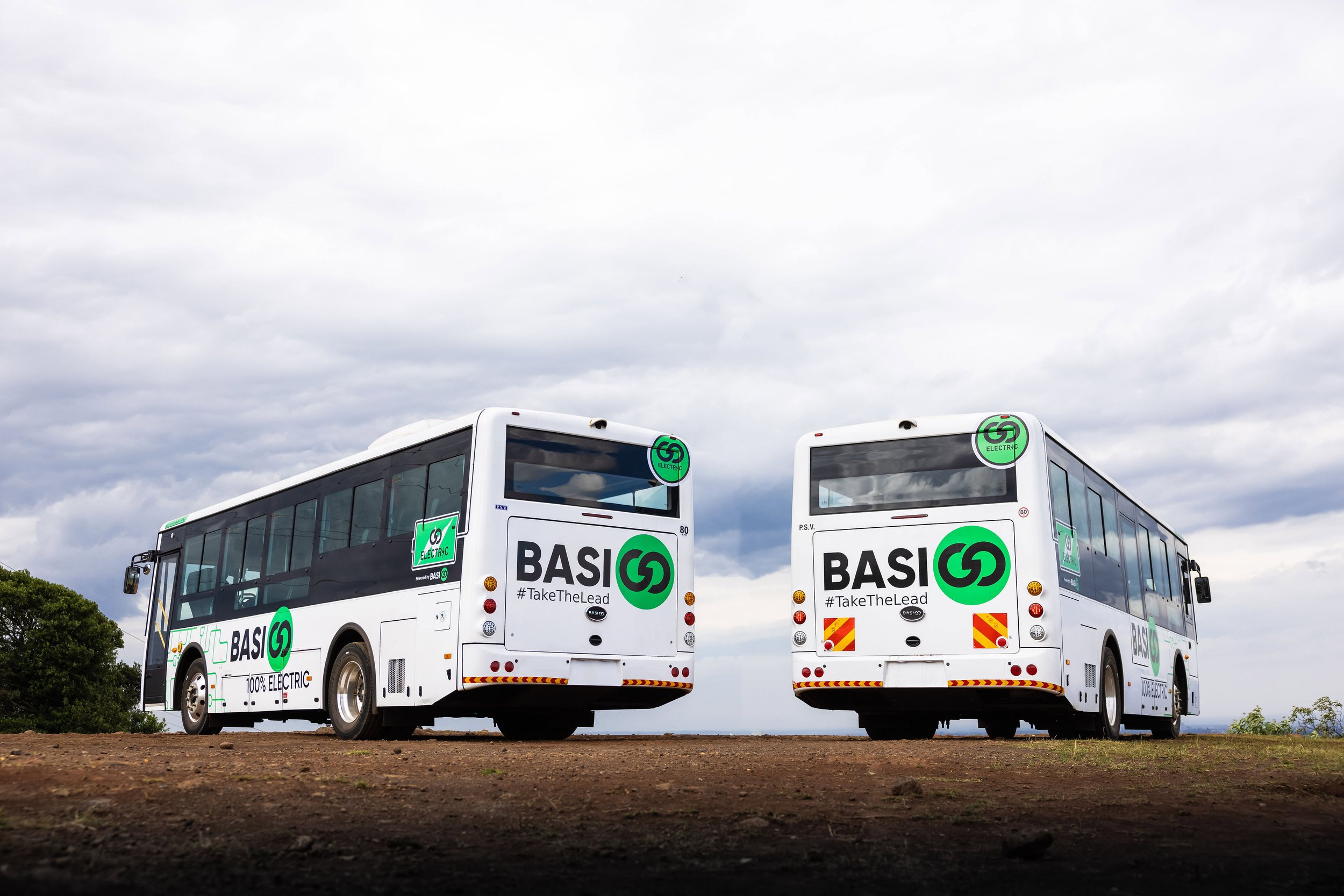
BasiGo Ltd, a Nairobi-based EV mobility startup founded in 2021, has officially rolled out Kenya’s first-ever electric matatu (minibus) pilot on inter-city routes, extending its footprint beyond Nairobi to key regional corridors in a bold move for clean public transport.
This project marks a pivotal step toward decarbonising Kenya’s transport, with electric vans operating on major routes including Nyahururu–Nyeri, Nyahururu–Nakuru, and Thika–Nairobi.
PAY ATTENTION: Follow our WhatsApp channel to never miss out on the news that matters to you!
SACCO Partners
- BasiGo has partnered with two established transport SACCOs:
- 4NTE SACCO, which will operate on Nyahururu–Nyeri and Nyahururu–Nakuru routes.
- Manchester Travellers Coach SACCO, managing services along Thika–Nairobi.
- Charging Infrastructure
- Fast DC charging stations are now live in Nyahururu and Thika, supporting the pilots with 90-minute recharge cycles for 300 km driving range per vehicle.
Pay‑As‑You‑Drive (PAYD) Model
- BasiGo’s PAYD financing allows operators to lease vehicles with minimal upfront capital:
- Includes charging, maintenance, insurance, analytics, and roadside support.
- Fleet uptime is guaranteed at ~90% per month.
- The battery-only lease option costs ~KES 44/km; full bus lease runs ~KES 70/km after a deposit of around KES 1 million.
From the Leadership: Vision & Expectations
BasiGo’s Perspective
- Moses Nderitu, BasiGo’s Managing Director in Kenya, emphasized that this expansion takes electric mobility “beyond Nairobi” and aims to give matatu culture a clean-energy makeover:
“We are delighted to extend electric mobility beyond Nairobi and electrifying an iconic part of Kenya’s history – the matatu”
SACCO Buy-In
- Wilfred Daniel Kimotho, 4NTE SACCO Chairman, expressed optimism:
“We are excited to be early adopters of this technology… This partnership places us at the forefront of a transport revolution which is electric, efficient, and built for the future.”
He confirmed the pilot involves two vans over a three-month test period, with plans to scale if successful .
[DOWNLOAD OUR MAGAZINE]
- ALVIN RUME OPHI: INSIDE THE MIND OF A CRYPTO ANALYST
- DONJAZZY: MAKING MILLIONS WITH CRYPTO IN 10 MINUTES
- JUDE OZINEGBE: INSPIRING NEXT GENERATION DIGITAL ECONOMY
- Herbert Wigwe: Everything You Need to Know [WIGWE ODYSSEY]
Setting the Stage: Kenya’s Electric Mobility Context
Why Inter-City EVs Matter
- Kenya’s public transport is heavily diesel-dependent—with matatus covering over 70% of commuter trips in cities like Nairobi. These vehicles often idle, contributing to air pollution and health risks .
- EV interventions have largely stayed within urban centers to date. BasiGo’s pilot is the first major push to prove EV feasibility on longer-distance, informal transport routes .
Growth Trajectory
- Motorcycle taxis dominate Kenya’s vehicle mix (~50%), but adoption of EV buses and minibuses is rising: in 2024, electric buses made up ~1.1% of new registrations, compared to only ~0.18% for cars—highlighting EV potential in mass transit.
- BasiGo has raised $41.5 million in 2024 to expand its local assembly plant in Nairobi, targeting over 1,000 electric vans deployed across Kenya within a few years .
Assembly & Economic Impact
- Since 2023, BasiGo has partnered with Associated Vehicle Assemblers (AVA) to locally assemble buses and vans—supporting job creation and fueling Kenya’s industrialisation agenda through EV manufacturing capacity.
Benefits & Challenges: What’s at Stake
Environmental & Operational Upside
- Each EV avoids diesel consumption and greenhouse emissions—reducing pollutants from one of the busiest segments of public transport.
- Operators report lower operating costs per km thanks to cleaner energy and maintenance included in PAYD plans.
- The pilot boosts investor confidence in EV viability for longer regional routes, and shows that EVs can perform reliably under Kenyan road conditions.
Barriers to Scale
- Infrastructure gaps remain outside Nairobi—charging network density is still low.
- Kenya’s matatu sector is largely informal and risk-averse, with skepticism toward technology and limited access to capital.
- Road conditions on rural routes may test durability—pilots must prove EVs can withstand rough terrain.
- Regulatory clarity, taxation, and fiscal incentives—including VAT and import duty breaks under the “Buy Kenya, Build Kenya” policy—are critical for scaling up local assembly and EV uptake.
A Six-Month Outlook: What to Expect
Phase 1: Pilot Testing (0–3 Months)
- Operations: The three pilot vehicles run daily on regional routes, monitored for range, uptime, user experience, and charging turnaround.
- Data collection: Real-world insights on total cost versus diesel, battery performance, and passenger feedback.
- Evaluation: SACCOs and BasiGo assess viability and discuss scaling plans.
Phase 2: Scale-Up (Post‑Pilot, 3–18 Months)
- Assuming success, new orders could see dozens more electric vans deployed—beginning with the same corridors and expanding into others.
- Investment in new charging stations at strategic hubs like Nakuru, Nyeri, and along the Great North Road.
- Moves toward mass assembly of vans and predictable supply chains for spare parts and batteries.
Phase 3: Systemic Transformation (1–3 Years)
- National expansion toward 1,000+ electric vans deployed countrywide, with fleet electrification becoming standard across multiple SACCOs.
- Potential ripple effects: other matatu operators, bus operators, and regulators embracing EV adoption.
- Kenya poised as a clean public transport blueprint for other African economies.
✅ Key Metrics Snapshot
| Metric | Value / Target |
|---|---|
| Vehicle capacity | 16–19 seats per van |
| Range per charge | Up to 300 km |
| Recharge time | ~90 minutes (fast DC stations) |
| Initial routes | Nyahururu–Nyeri, Nyahururu–Nakuru, Thika–Nairobi |
| SACCO partners | 4NTE SACCO, Manchester Travellers Coach |
| Financing model | Pay-As-You-Drive (KES 70/km or battery-only KES 44/km) |
| Pilot fleet size | 3 vehicles (2 on Nyahururu corridors, 1 on Thika–Nairobi) |
| Pilot duration | ~3 months |
| Expansion target | 1,000+ electric vans nationwide |
| Local assembly partner | Associated Vehicle Assemblers (AVA) since 2023 |
| Funding raised | $41.5 million (2024) |
Why It Matters: Bigger Picture Impact
Climate & Air Quality
- Electric routes replace diesel, reducing greenhouse emissions and particulate pollution in both urban and rural zones.
Financial Equity & Practical Access
- PAYD leasing removes steep capital barriers for operators, while bundled service promises reduce maintenance risk.
Industrialisation & Job Creation
- Local assembly under AVA builds Kenya’s clean energy manufacturing base, supporting skills, jobs, and technical capacity.
Regional Exemplar
- A successful pilot positions Kenya as a frontrunner in sustainable mobility in East Africa—courting investors and inspiring replication in other markets like Uganda, Rwanda, and Tanzania.
Challenges Ahead & Policy Levers
- Grid reliability: Consistent power supply and charger uptime crucial for daily operations.
- Financial literacy: Operators must be educated on long-term cost savings under PAYD versus diesel purchases.
- Robust fiscal policy: Tax exemptions on EVs, batteries, and charging hardware would make local assembly and adoption more competitive.
- Regulation & oversight: Authorities need to ensure safety standards and enforce route compliance for electric matatus.
Final Thoughts: Trailblazing Kenya’s Electric Transport Revolution
BasiGo’s inter-city electric matatu pilot is a watershed moment for electric mobility in Kenya. For the first time, rural and inter-county routes now serve as proving grounds for EV adoption—bridging decades of diesel dependency with a sustainable, modern alternative .
If the pilot succeeds—demonstrating reliability, cost savings, and user acceptance—we can expect a tipping point. Kenya could achieve scalable EV transport across matatu corridors from the Rift Valley to the Central Highlands. SACCO fleets, formerly diesel-bound, could become low-carbon, efficient, and globally competitive.
This pilot also stretches beyond transportation. It intersects energy transition, job creation, climate action, and national resilience. By backing operators through PAYD and investing in local assembly, BasiGo is laying the ground for a clean transport economy built in Kenya—for Kenya, and for East Africa.
Stay tuned: the next few months will reveal whether these electric vans can drive Kenya’s public transport into a greener, more inclusive future.












Facebook Comments